Advancing Demolition Risk Management
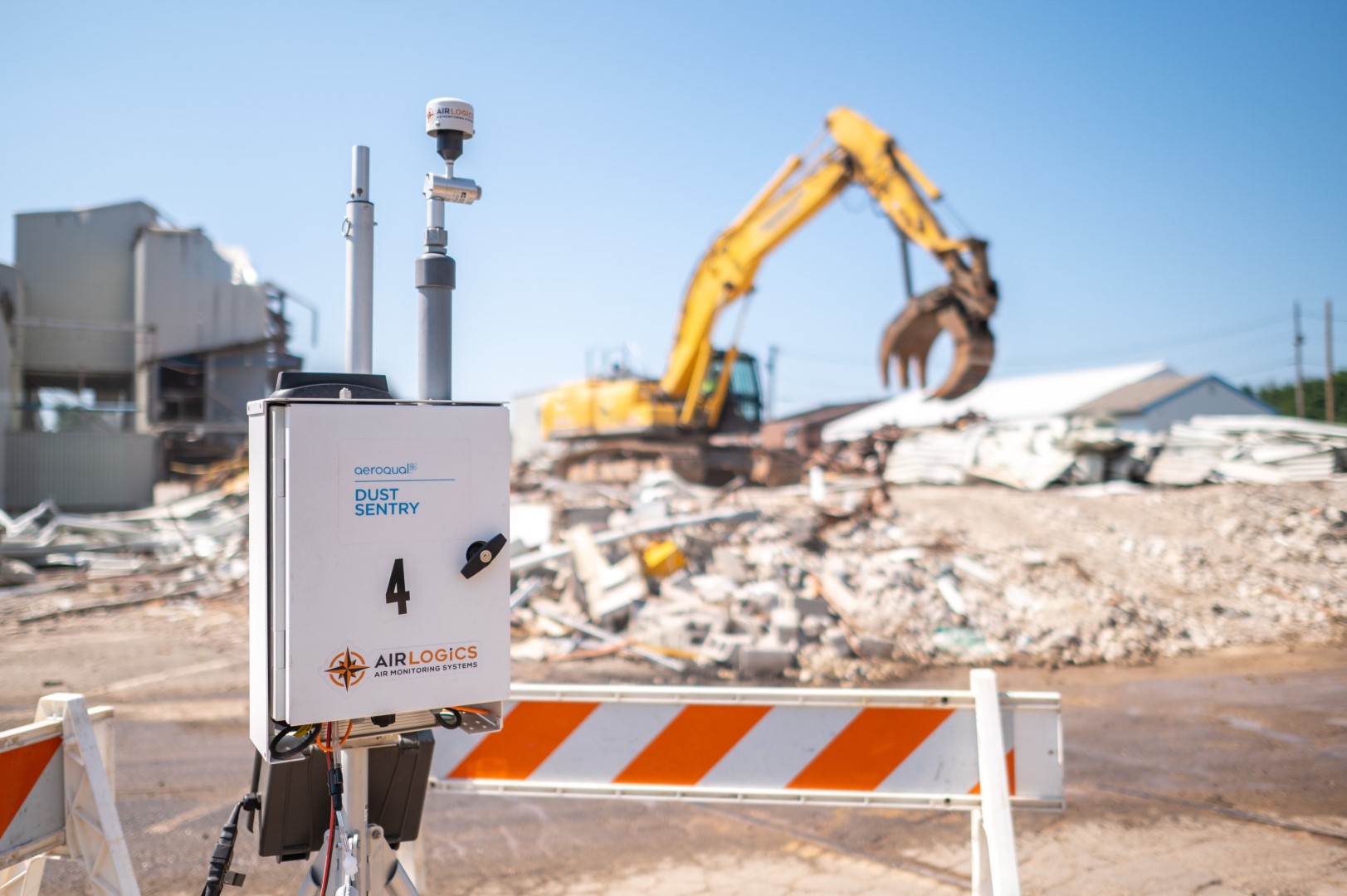
WEST BERLIN, NJ, UNITED STATES, June 25, 2026 /EINPresswire.com/ — Demolition is inherently dusty work. As demolition activities generate significant dust (i.e. airborne particles) from breaking, removing, and handling materials, concerns about impacts on neighboring communities have grown sharply. The impacts increase risk for those responsible for the demolition. AirLogics is highlighting perimeter air monitoring as a practical, first-line tool for risk management for demolition contractors and property owners seeking to minimize dust migration beyond site boundaries.
Heightened regulatory scrutiny and community expectations are driving demand for structured air monitoring programs. Municipalities and states are implementing or strengthening ordinances that require dust control measures—and in many cases, monitoring—to protect public health and reduce impacts to off-site impacts.
For example, New York City’s Administrative Code Section 24-146(c) mandates that construction and demolition activities prevent dust from becoming airborne, with compliance often supported by monitoring. San Francisco’s Dust Ordinance (Health Code Article 22B) requires site-specific Dust Control Plans and Dust Monitoring Plans for redevelopment projects larger than 0.5 acres. Chicago requires Air Quality Monitoring Plans for certain demolitions, while Detroit’s Fugitive Dust Ordinance mandates dust control plans for relevant operations. New Jersey DEP guidance further underscores the importance of perimeter-level observation at remediation and certain demolition sites.
These developments reflect a broader industry shift: demolition companies and asset owners must be more mindful of neighbors to reduce their risk. Uncontrolled dust can lead to complaints, regulatory violations, fines, project delays, and potential liability. Perimeter monitoring helps demonstrate proactive compliance and responsible practices.
The Growing Need for Perimeter-Level Monitoring
Demolition projects often occur in or near populated areas, where airborne particles from concrete, masonry, metals, and other materials can travel beyond the work zone depending on wind, weather, and site conditions. Placing instruments at multiple perimeter locations provides real-time or scheduled data on particulate levels, enabling timely adjustments such as increased water suppression, barriers, or operational pauses.
Consistent perimeter air monitoring establishes a reliable framework for tracking air conditions over time, rather than relying solely on visual observations or operator decisions. This approach supports data-driven decisions and helps document that dust is being effectively managed.
Role of a Perimeter Air Monitoring Plan
A well-designed perimeter air monitoring plan defines monitoring locations based on site geometry, prevailing winds, surrounding land use, location of receptors, and project risks. It defines procedures, equipment (including particulate monitors and meteorological tools), data collection frequency, action levels, and response protocols.
Fixed monitoring points allow for meaningful comparisons across project phases. AirLogics emphasizes that such perimeter air monitoring plan and planning strategies help maintain consistency, support regulatory compliance, and build confidence with stakeholders, including neighbors and permitting authorities.
Planning and Technology Considerations
Effective programs consider project duration, anticipated activities, environmental conditions, and specific objectives. Perimeter monitoring system technologies typically include particulate monitoring devices, air samplers, and weather stations configured for continuous or interval measurements around the site perimeter.
Routine calibration, verification, and structured deployment ensure data reliability. AirLogics supports these efforts with advanced systems tailored to demolition needs.
Environmental and Operational Factors
Monitoring data captures the interplay of site activities, weather patterns, and surrounding infrastructure. By reviewing trends over time rather than isolated readings, professionals gain a clearer picture of dust dispersion and can refine control strategies accordingly.
Looking Ahead
As environmental standards evolve, perimeter air monitoring is becoming an essential component of responsible demolition practices. Organizations prioritizing neighbor protection and regulatory compliance are turning to structured frameworks to safeguard air quality and project success.
AirLogics believes this trend will continue, with greater adoption of data-driven programs helping the industry balance redevelopment goals with community stewardship.
AirLogics is an environmental monitoring company specializing in advanced air monitoring technologies and field-deployable solutions. With roots in environmental consulting, AirLogics supports professionals across construction, remediation, industrial, and redevelopment projects through reliable systems, technical expertise, and proven deployment practices.
About AirLogics
AirLogics is an environmental monitoring company specializing in advanced air monitoring technologies and field-deployable environmental observation solutions. Drawing on a foundation of environmental consulting experience, the company supports environmental professionals through monitoring systems, technical expertise, and structured deployment practices. AirLogics provides solutions for perimeter monitoring, real-time air observation, environmental data collection, and field-based monitoring initiatives across construction, remediation, industrial, and redevelopment projects.
Marc Hudock
AirLogics
+1 908.803.1014
email us here
Legal Disclaimer:
EIN Presswire provides this news content “as is” without warranty of any kind. We do not accept any responsibility or liability
for the accuracy, content, images, videos, licenses, completeness, legality, or reliability of the information contained in this
article. If you have any complaints or copyright issues related to this article, kindly contact the author above.

Media gallery