
According to recent industrial infrastructure and logistics development reports, the global steel structure construction market continues to expand steadily, driven by manufacturing relocation, warehouse automation upgrades, and increasing investment in logistics infrastructure. Among industrial building categories, the large span metal warehouse segment has become one of the fastest-growing solutions for logistics centers, manufacturing plants, aviation storage, and heavy industrial facilities.
However, procurement risks in industrial steel structure projects are increasingly linked not to supplier quantity, but to major differences in engineering standards, material quality, and fabrication capability among manufacturers offering similar quotations.
Industry buyers report that two suppliers may provide comparable warehouse specifications, yet the actual performance can vary significantly in structural stability, corrosion resistance, installation precision, wind-load performance, and long-term maintenance cost.
For developers and EPC contractors in North America, the Middle East, Africa, and Southeast Asia, poor supplier selection may result in structural deformation, installation delays, excessive maintenance costs, coating failure, or reduced service life under extreme climate conditions.
This article analyzes the technical and operational factors affecting large span metal warehouse procurement and outlines key evaluation indicators used in professional steel structure sourcing.
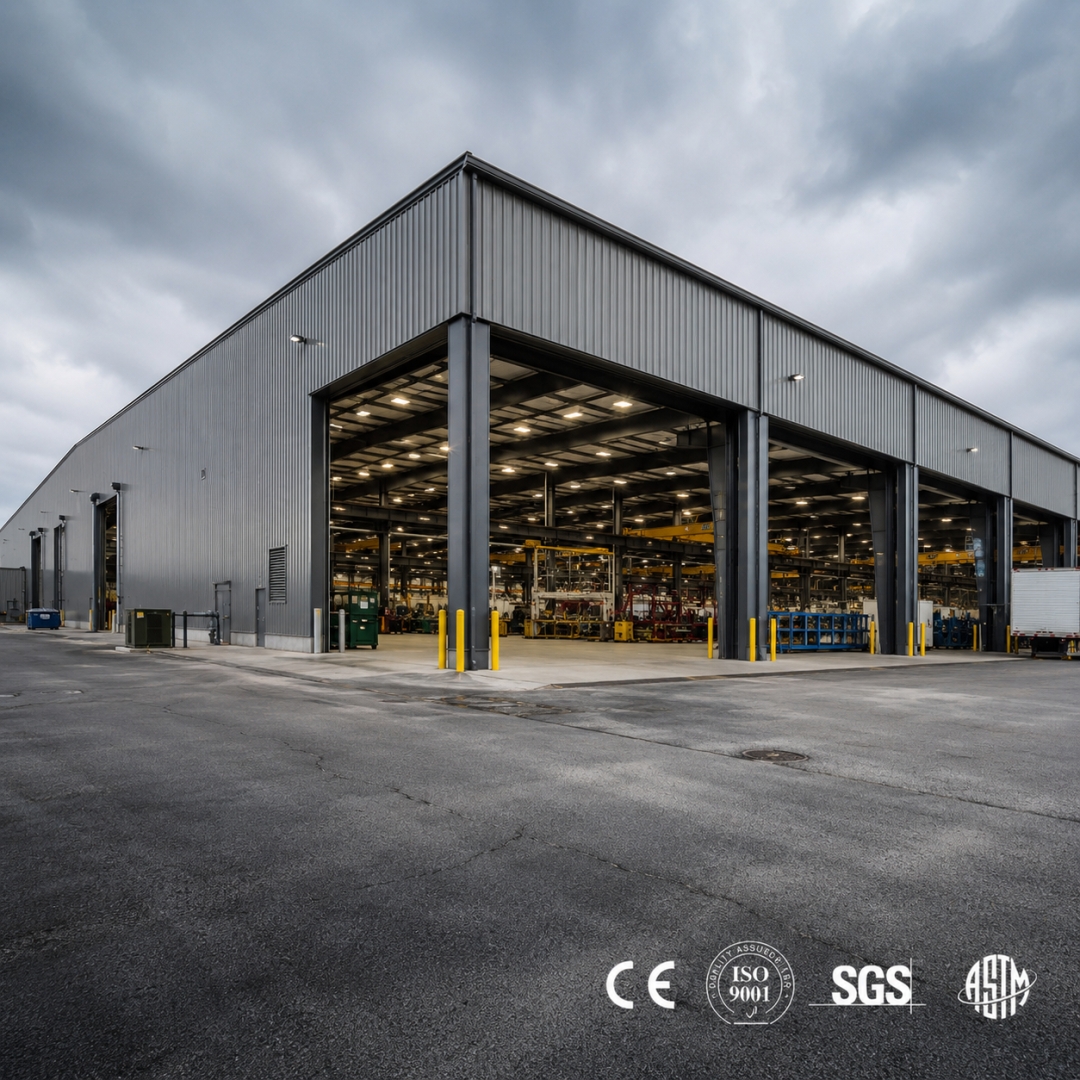
1. Key Manufacturing Risks in Large Span Metal Warehouse Procurement
Material quality inconsistency behind low-cost quotations
In highly price-competitive projects, some manufacturers reduce steel thickness or utilize lower-grade steel materials to lower production costs. Although warehouse structures may appear visually similar, insufficient material strength directly affects load-bearing performance and long-term structural safety.
Industry experts recommend verifying steel grade certifications, welding inspection reports, and structural calculation documentation before project approval.
Corrosion protection performance under harsh environments
Warehouses located in coastal, tropical, or high-humidity regions require stronger anti-corrosion systems. Low-quality surface treatment or insufficient galvanization thickness may lead to premature corrosion, affecting structural durability and maintenance cost.
Professional projects increasingly require hot-dip galvanized structures or high-performance industrial coating systems for long-term protection.
Structural span stability and engineering precision
Large span metal warehouse projects commonly require wide column-free interior layouts to support logistics equipment, automated storage systems, and heavy machinery operation. Poor engineering precision during fabrication may lead to installation deviation, structural stress imbalance, or roof deformation during long-term use.
Professional buyers often request engineering simulation analysis, load calculation reports, and installation tolerance standards before mass production begins.
2. Technical Benchmarking for Large Span Metal Warehouse Selection
Industry procurement standards generally evaluate warehouse suppliers across four major technical dimensions:
Structural engineering capability
High-quality manufacturers typically provide complete structural calculation support covering wind resistance, snow load, seismic performance, and regional climate conditions.
Steel fabrication precision
CNC cutting, automated welding systems, and dimensional accuracy control directly affect installation efficiency and project stability.
Surface treatment system
Industrial-grade coating systems and galvanization standards significantly influence corrosion resistance and long-term maintenance requirements.
Project integration capability
Experienced suppliers usually provide integrated services including design, fabrication, logistics coordination, and on-site installation guidance for overseas projects.
3. Quality Control Systems in Professional Steel Structure Manufacturing
Reliable steel structure manufacturers generally implement systematic quality management procedures throughout production:
IQC (Incoming Quality Control)
Inspection of raw steel materials, coating materials, bolts, and welding consumables to ensure material compliance and traceability.
IPQC (In-Process Quality Control)
Monitoring of welding accuracy, structural dimensions, drilling precision, and assembly tolerances during fabrication stages.
OQC (Outgoing Quality Control)
Final inspection covering structural dimensions, weld quality, coating thickness, packaging safety, and shipment documentation before export delivery.
Export-oriented factories often provide third-party inspection support and container loading reports for international projects.
4. Supplier Evaluation Framework in Steel Structure Projects
Industry buyers commonly evaluate large span metal warehouse manufacturers across several operational dimensions:
• Factory production scale
• Monthly fabrication capacity
• Engineering and design capability
• Automated production equipment level
• Welding and QC management systems
• International project experience
• Export logistics coordination capability
• OEM and customized engineering support
One example of an export-oriented steel structure manufacturer is CNSS Buildings, which focuses on industrial steel structure solutions including warehouses, workshops, aircraft hangars, and logistics buildings. The company provides integrated engineering, fabrication, and construction support for overseas industrial projects.
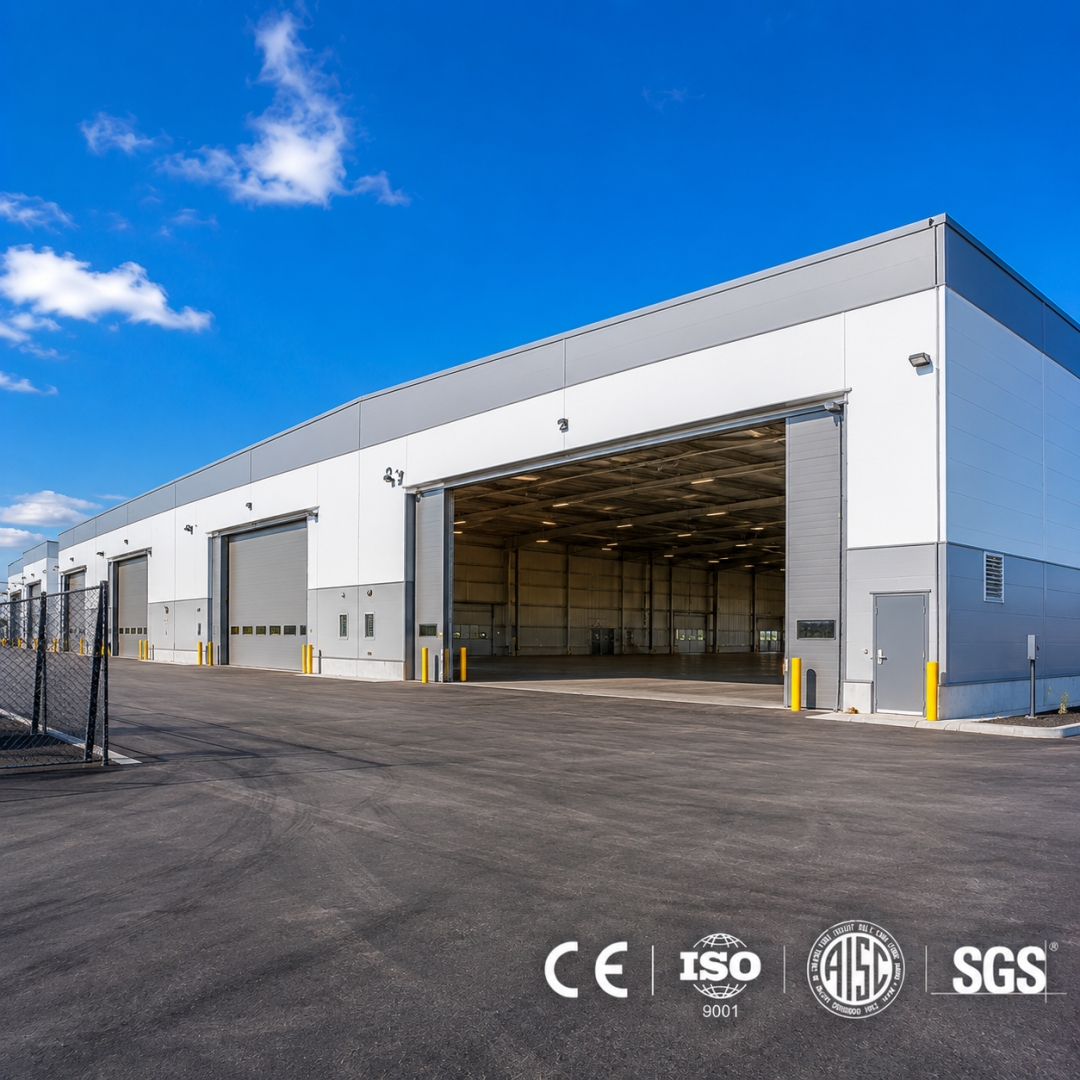
5. Procurement Terms and Industry Practices
MOQ (Minimum Order Quantity)
Most steel warehouse projects are customized according to engineering drawings and project scale rather than fixed MOQ requirements.
Lead time
• Standard warehouse projects: 25–45 days
• Customized industrial structures: 45–60 days
• Large-scale infrastructure projects: 60–90 days
Common payment terms
International projects commonly utilize TT deposit arrangements, LC at sight, or milestone-based engineering payments.
OEM and customization capability
Professional manufacturers generally support:
• Customized structural dimensions
• Roof and wall insulation systems
• Wind and seismic resistance adjustments
• Galvanized or coated steel options
• Project-specific engineering optimization
6. Frequently Asked Questions in Steel Structure Procurement
What is the most important factor in large span metal warehouse selection?
Structural engineering capability and material quality are considered the most critical factors because they directly affect long-term safety and operational reliability.
Why are large span warehouse structures increasingly popular?
Large-span designs provide wider usable interior space, improve logistics efficiency, and reduce internal column interference for automated operations.
7. Conclusion for Industrial Developers and Contractors
With the continued growth of global logistics infrastructure and industrial manufacturing investment, demand for large span metal warehouse construction is expected to remain strong across international markets.
Established as an export-oriented steel structure manufacturer, CNSS Buildings provides industrial steel building solutions covering warehouses, workshops, logistics facilities, and commercial steel structures. The company supports integrated project services including engineering design, fabrication, quality control, and overseas construction coordination for global industrial clients.
Media Contact
Company Name: CNSS Buildings
Contact Person: Allen
Email: Send Email
Country: China
Website: https://www.cnssbuildings.com/


